Here's everything you need to know about TPG Fibre to the Building (FTTB) services on the Vision network.
Select one of the links below to jump to a query:
- Where is TPG FTTB available?
- How is TPG FTTB connected?
- What do I need for TPG FTTB?
- How does TPG Voice work?
- How long does it take to get connected to TPG FTTB?
- Can I use smart wiring with TPG FTTB?
- Will my medical alarm, security alarm, EFTPOS machine or fax machine work on TPG FTTB?
Where is TPG FTTB available?
TPG FTTB is available in select buildings nationwide. You can check your address on our website.
How is TPG FTTB connected?
Fibre optic cable will run to your building's Main Distribution Frame (MDF), which is typically in the basement or a locked telecommunications cabinet. From there, copper wiring will run to a wall socket in each unit within the building.

What do I need for TPG FTTB?
You can use your own modem with TPG FTTB, or you can go with a TPG supplied modem — whichever suits you. Just keep in mind that if you want to use TPG Voice, you’ll need a TPG supplied modem from the start. You’ll need a high-speed compatible modem with our FTTB Max plan.
Some connections need a Network Termination Unit (NTU), which is an extra device your modem plugs into before plugging into the wall. If you need one, Vision Networks will install it for you during setup — it’s not something we deliver in the box..
Note: If you move out, please leave your NTU behind. It won't be useful at your new place.
If you want to use TPG Voice, you’ll need to plug your phone into your TPG supplied modem.
How does TPG Voice work?
TPG Voice is a VoIP (Voice over Internet Protocol) phone service that uses your internet connection to make phone calls.
How long does it take to get connected to TPG FTTB?
Most connections are done within 10 business days. It may take up to 20 business days if it's the first time your address has been connected to TPG FTTB, or if an installer needs to come to your place.
If you do need an installation, we'll book the earliest available appointment by default - or you can choose a later date if it's more convenient.
Can I use smart wiring with TPG FTTB?
Smart wiring is internal Ethernet cabling at your house. It means you have Ethernet wall sockets to connect devices to your nbn modem without running Ethernet cables along the floor or under doors. It's a good investment for heavy internet uses, or larger homes that don't get enough coverage from a standard Wi-Fi signal.
You can use smart wiring with TPG FTTB, but it won't be included with your installation. You'll need to hire a registered cabler to have smart wiring installed.
Note: Existing smart wiring may need to be re-wired to work with TPG FTTB.
Will my medical alarm, security alarm, EFTPOS machine or fax machine work on TPG FTTB?
Many devices that work over phone lines can work on TPG FTTB, but you need to contact your service provider to make sure before you switch. You may need to get a different type of product that will work on TPG FTTB.
Note: TPG does not offer a Priority Assistance service. If you have Priority Assistance or believe you may be eligible, please consider this before ordering.
If your TPG Fibre to the Building (FTTB) service is having dropouts, it means your internet will go offline and come back online intermittently. These steps will help you identify the issue.
- Your service may just be affected by an outage or planned maintenance. You can check your address on our Network Status page.
If there is an outage or planned maintenance, the results will give you an estimated fix time. - Do you have any devices connected to your modem with an Ethernet cable? If these devices stay connected when devices on Wi-Fi drop out, switch to troubleshooting Wi-Fi Dropouts.
- Find your modem and make sure the cables are plugged in securely and not damaged. Our setup guide will show you how to plug in.
You’ll need to replace any broken or chewed cables. Not all setups have a Network Termination Unit (NTU). - If you have a Network Termination Device (NTU) and you notice any of these status light behaviours, please call us on 1300 997 274.
ZyXel GM4100-B0 G.Fast NTU - Slow blinking green G.Fast light
The phone cable must not be longer than 1 metre.
Adtran® 422G Gfast NTU - Flashing green G.Fast light
The phone cable must not be longer than 1 metre.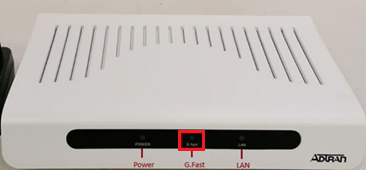
LEA Networks NTU - Flashing green OUT or Warning light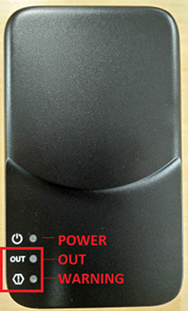
Power/DIAG NTU - Red DIAG light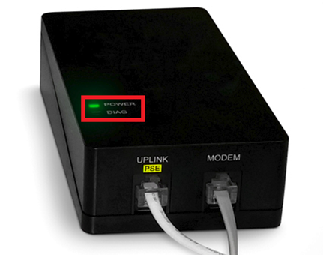
- Still getting dropouts? Please call us on 1300 997 274 and we’ll help you.
If your TPG Fibre to the Building (FTTB) service is offline, you won’t be able to visit a website, browse, stream, or download. Email and any other services that use the internet will not work. These steps will help you identify the issue.
- Your service may just be affected by an outage or planned maintenance. You can check your address on our Network Status page.
If there is an outage or planned maintenance, the results will give you an estimated fix time. - Find your modem and make sure the cables are plugged in securely and not damaged. Our setup guide will show you how to plug in.
You’ll need to replace any broken or chewed cables. Not all setups have a Network Termination Unit (NTU).
- Turn off the your modem's power outlet for at least 10 seconds.
- Turn the outlet back on and wait for your modem’s Internet light to come on, then see if you can visit a website.

- If you have a Network Termination Unit (NTU) and you notice any of these status light behaviours, please call us on 1300 997 274.
ZyXel GM4100-B0 G.Fast NTU - Slow blinking green G.Fast light
The phone cable must not be longer than 1 metre.
Adtran® 422G Gfast NTU - Flashing green G.Fast light
The phone cable must not be longer than 1 metre.
LEA Networks NTU - Flashing green OUT or Warning light
Power/DIAG NTU - Red DIAG light
- Do you have any devices connected to your modem with an Ethernet cable? If these devices can visit a website but devices on Wi-Fi can’t, switch to troubleshooting Wi-Fi No Connection.
- If you can view websites on some devices but not others, even when they’re both connected the same way, you may need to fix some browser settings. Check out our guide on Browsing issues.
- Still can't get online? Please call us on 1300 997 274 and we’ll help you.
If your TPG Fibre to the Building (FTTB) service is running slowly, these steps will help you identify the issue.
-
Your service may just be affected by planned maintenance. You can check your address on our Network Status page.
If there is planned maintenance, the results will give you an estimated fix time. -
Find your modem and turn off its power outlet for at least 10 seconds.
-
Turn the outlet back on and wait for your modem’s Internet light to come on, then run a speed test.

-
Do you have any devices connected to your modem with an Ethernet cable? If speeds on these devices are fine but devices on Wi-Fi are slow, switch to Troubleshooting Wi-Fi speed.
-
Make sure your modem’s Ethernet cables are in good condition, with “CAT6” or “CAT5e” printed on them.
Older Cat5 Ethernet cables are not recommended for nbn services. You’ll need to replace any broken or chewed cables.
-
Your speed may temporarily slow down if you’re running more devices or apps than your connection can handle at the same time. For example, if a device is downloading a large file or running a 4K streaming app, your speed should improve when it’s finished.
If you need to run more devices or apps at the same time, you can change your plan in My Account or call us on 13 14 23 for support. -
Run a scan on your antivirus/anti-malware software. If any infections are detected, make sure they are quarantined and removed.
Contact your software’s Customer Support if you need help. -
Still getting slow speeds? Please call us on 1300 997 274 or lodge a fault with the My TPG App (iOS or Android) and we’ll help you.
Log in to the My TPG app and hit Your Internet Speed, then Test Your Speed. If your speed is below the acceptable range, you can hit Lodge Fault and submit the form.
Your modem will take care of the hard stuff like internet settings, but we’ll need your help to plug it in. The main cables you need will come in the box, and you can grab extra Ethernet cables from the shops if you need them.
Note: Some homes will also have a Network Termination Unit (NTU). If your place hasn't been connected to TPG Fibre before, and an NTU is needed, Vision Network will set it up for you during installation.
Choose your modem (with or without NTU) to get started:
| Picture | Modem |
|---|---|
|
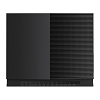
VX420-G2V Modem only |
|
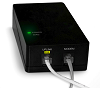
VX420-G2V Modem with NTU |
|
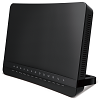
VX220-G2V Modem only |
|
|
VX220-G2V Modem with NTU |
|
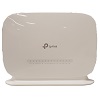
TP-Link VR1600v only |
|
|
TP-Link VR1600v with NTU |
|
Don't have a TPG modem? See our BYO modem guide |
How to plug in your VX420-G2V Modem for TPG Fibre FTTB
- First, make sure you’ve got a message from us asking you to plug in your modem. We need to get your connection ready on our side first.
- Find your phone wall socket – you probably already have a modem plugged in from your last internet service. Unplug any old modem from the phone wall socket and power outlet.
- Use the power cable to connect your modem's Power port to a power outlet and press your modem’s ON/OFF button.
- Use the phone cable to connect your modem’s grey DSL port to your phone wall socket.
- Leave your modem alone for 30 minutes while it runs through its automatic setup.
- Check the Internet light on your modem. If it’s green, you’re online and you can start connecting your devices.
No green light? Call us on 1300 997 274 and we can help you out.
- You'll find the default Wi-Fi name (SSID) and Wireless password/PIN on your modem's barcode sticker. If you want to change your Wi-Fi name or password, use this guide.

- Your devices will automatically connect to the best Wi-Fi possible. If your Wi-Fi’s running slow, check out Improving Wi-Fi Signal.
- For online gaming or HD/4K streaming, Ethernet is better than Wi-Fi. If you have extra Ethernet cables, you can connect up to 4 devices to your modem’s yellow LAN ports.
- To use your TPG Voice phone service, just plug a handset into your modem’s green Phone port.

- You’re now good to go.
If you don’t want to keep your old modem, see if your local council has any eWaste recycling facilities.
How to plug in your VX420-G2V Modem for TPG Fibre FTTB with an NTU
- First, make sure you’ve got a message from us asking you to plug in your modem. We need to get your connection ready on our side first.
- Find your phone wall socket – you probably already have a modem plugged in from your last internet service. Unplug any old modem from the phone wall socket and power outlet.
- Use the power cables to connect the Power port on your modem and NTU to power outlets, and press your modem’s ON/OFF button.
- If your NTU has a G.Fast port: Use an Ethernet cable to connect your modem’s blue WAN port to your NTU's LAN 1 port.
Older NTUs may have a LAN port instead. Learn more.
If your NTU doesn't have a G.Fast port: Use a phone cable to connect your modem’s grey DSL port to your NTU's LINE port.
Older NTUs may have a MODEM port instead. Learn more. - Use a phone cable to connect your your NTU's LINE + POWER or G.Fast port to your phone wall socket.
Older NTUs may have an UPLINK port instead. Learn more. - Leave your modem alone for 30 minutes while it runs through its automatic setup.
- Check the Internet light on your modem. If it’s green, you’re online and you can start connecting your devices.
No green light? Call us on 1300 997 274 and we can help you out.
- You'll find the default Wi-Fi name (SSID) and Wireless password/PIN on your modem's barcode sticker. If you want to change your Wi-Fi name or password, use this guide.
- Your devices will automatically connect to the best Wi-Fi possible. If your Wi-Fi’s running slow, check out Improving Wi-Fi Signal.
- For online gaming or HD/4K streaming, Ethernet is better than Wi-Fi. If you have extra Ethernet cables, you can connect up to 4 devices to your modem’s yellow LAN ports.
- To use your TPG Voice phone service, just plug a handset into your modem’s green Phone port.

- You’re now good to go.
If you don’t want to keep your old modem, see if your local council has any eWaste recycling facilities.
How to plug in your VX220-G2V Modem for TPG Fibre FTTB
- First, make sure you’ve got a message from us asking you to plug in your modem. We need to get your connection ready on our side first.
- Find your phone wall socket – you probably already have a modem plugged in from your last internet service. Unplug any old modem from the phone wall socket and power outlet.
- Use the power cable to connect your modem's Power port to a power outlet and press your modem’s ON/OFF button.
- Use the phone cable to connect your modem’s grey DSL port to your phone wall socket.
- Leave your modem alone for 30 minutes while it runs through its automatic setup.
- Check the Internet light on your modem. If it’s blue, you’re online and you can start connecting your devices.
No blue light? Call us on 1300 997 274 and we can help you out.
- You'll find the default Wi-Fi name (SSID) and Password on your modem's barcode sticker. If you want to change your Wi-Fi name or password, use this guide.
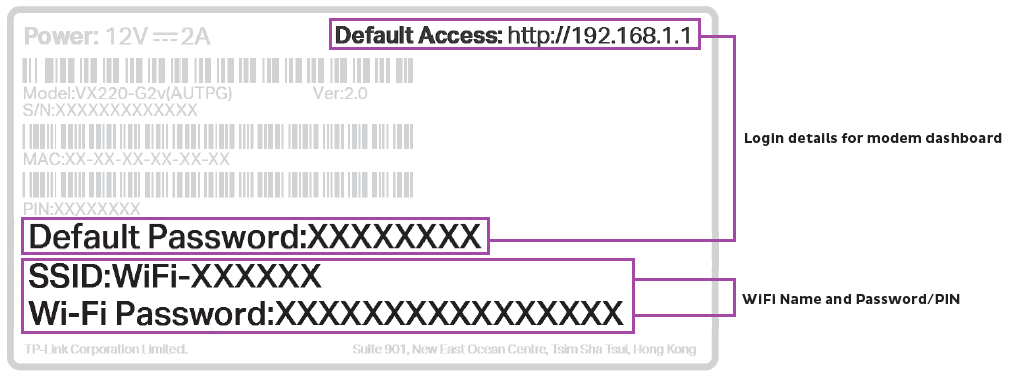
- Your devices will automatically connect to the best Wi-Fi possible. If your Wi-Fi’s running slow, check out Improving Wi-Fi Signal.
- For online gaming or HD/4K streaming, Ethernet is better than Wi-Fi. If you have extra Ethernet cables, you can connect up to 4 devices to your modem’s yellow LAN ports.
- To use your TPG Voice phone service, just plug a handset into your modem’s green Phone port.

- You’re now good to go.
If you don’t want to keep your old modem, see if your local council has any eWaste recycling facilities.
How you plug in your VX220-G2V Modem for TPG Fibre FTTB with an NTU
- First, make sure you’ve got a message from us asking you to plug in your modem. We need to get your connection ready on our side first.
- Find your phone wall socket – you probably already have a modem plugged in from your last internet service. Unplug any old modem from the phone wall socket and power outlet.
- Use the power cables to connect the Power port on your modem and NTU to power outlets, and press your modem’s ON/OFF button.
- If your NTU has a G.Fast port: Use an Ethernet cable to connect your modem’s blue WAN port to your NTU's LAN 1 port.
Older NTUs may have a LAN port instead. Learn more.
If your NTU doesn't have a G.Fast port: Use a phone cable to connect your modem’s grey DSL port to your NTU's LINE port.
Older NTUs may have a MODEM port instead. Learn more. - Use a phone cable to connect your your NTU's LINE + POWER or G.Fast port to your phone wall socket.
Older NTUs may have an UPLINK port instead. Learn more. - Leave your modem alone for 30 minutes while it runs through its automatic setup.
- Check the Internet light on your modem. If it’s blue, you’re online and you can start connecting your devices.
No blue light? Call us on 1300 997 274 and we can help you out.
- You'll find the default Wi-Fi name (SSID) and Password on your modem's barcode sticker. If you want to change your Wi-Fi name or password, use this guide.
- Your devices will automatically connect to the best Wi-Fi possible. If your Wi-Fi’s running slow, check out Improving Wi-Fi Signal.
- For online gaming or HD/4K streaming, Ethernet is better than Wi-Fi. If you have extra Ethernet cables, you can connect up to 4 devices to your modem’s yellow LAN ports.
- To use your TPG Voice phone service, just plug a handset into your modem’s green Phone port.

- You’re now good to go.
If you don’t want to keep your old modem, see if your local council has any eWaste recycling facilities.
How to plug in your TP-Link VR1600v for TPG Fibre FTTB
- First, make sure you’ve got a message from us asking you to plug in your modem. We need to get your connection ready on our side first.
- Find your phone wall socket – you probably already have a modem plugged in from your last internet service. Unplug any old modem from the phone wall socket and power outlet.
- Use the power cable to connect your modem's Power port to a power outlet and press your modem’s Power button.
- Use the phone cable to connect your modem’s grey DSL port to your phone wall socket.
- Leave your modem alone for 30 minutes while it runs through its automatic setup.
- Check the Internet light on your modem. If it’s green, you’re online and you can start connecting your devices.
No green light? Call us on 1300 997 274 and we can help you out.
- You'll find the default Wi-Fi name (SSID) and Wireless password/PIN on your modem's barcode sticker. If you want to change your Wi-Fi name or password, use this guide.
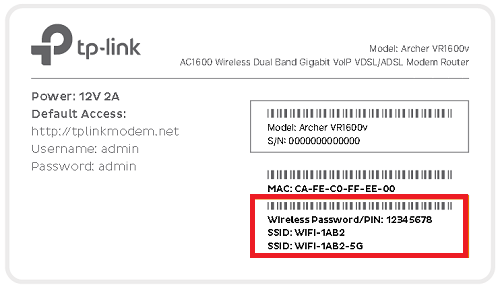
- Your devices will automatically connect to the best Wi-Fi possible. If your Wi-Fi’s running slow, check out Improving Wi-Fi Signal.
- For online gaming or HD/4K streaming, Ethernet is better than Wi-Fi. If you have extra Ethernet cables, you can connect up to 4 devices to your modem’s yellow LAN ports.
- To use your TPG Voice phone service, just plug a handset into your modem’s grey Phone 1 port.

-
You’re now good to go.
If you don’t want to keep your old modem, see if your local council has any eWaste recycling facilities.
How to plug in your TP-Link VR1600v for TPG Fibre FTTB with an NTU
- First, make sure you’ve got a message from us asking you to plug in your modem. We need to get your connection ready on our side first.
- Find your phone wall socket – you probably already have a modem plugged in from your last internet service. Unplug any old modem from the phone wall socket and power outlet.
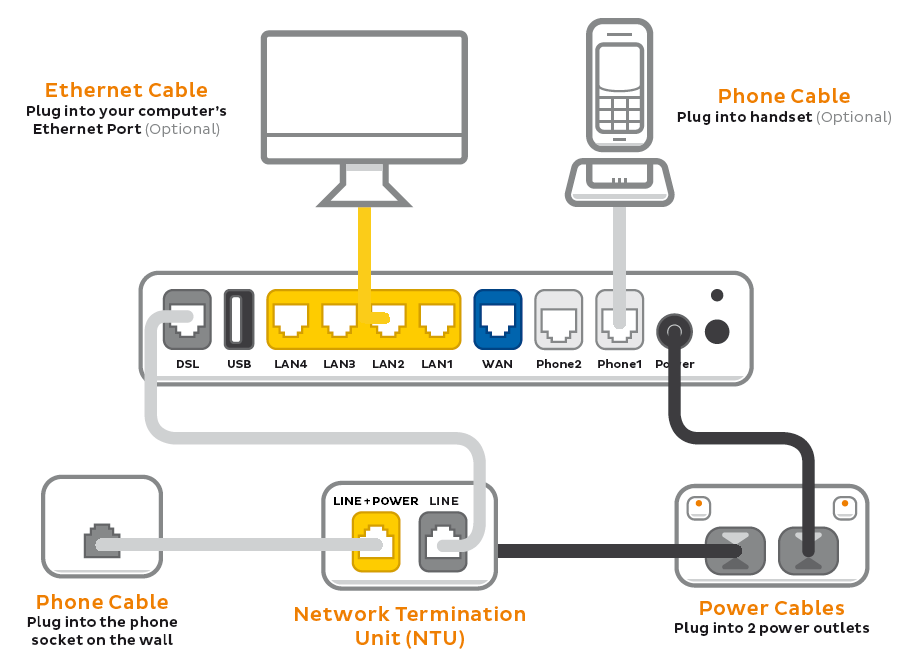
- Use the power cables to connect the Power port on your modem and NTU to power outlets, and press your modem’s Power button.
- If your NTU has a G.Fast port: Use an Ethernet cable to connect your modem’s blue WAN port to your NTU's LAN 1 port.
Older NTUs may have a LAN port instead. Learn more.
If your NTU doesn't have a G.Fast port: Use a phone cable to connect your modem’s grey DSL port to your NTU's LINE port.
Older NTUs may have a MODEM port instead. Learn more. - Use a phone cable to connect your your NTU's LINE + POWER or G.Fast port to your phone wall socket.
Older NTUs may have an UPLINK port instead. Learn more. - Leave your modem alone for 30 minutes while it runs through its automatic setup.
- Check the Internet light on your modem. If it’s green, you’re online and you can start connecting your devices.
No green light? Call us on 1300 997 274 and we can help you out.
-
You'll find the default Wi-Fi name (SSID) and Wireless password/PIN on your modem's barcode sticker. If you want to change your Wi-Fi name or password, use this guide.
- Your devices will automatically connect to the best Wi-Fi possible. If your Wi-Fi’s running slow, check out Improving Wi-Fi Signal.
- For online gaming or HD/4K streaming, Ethernet is better than Wi-Fi. If you have extra Ethernet cables, you can connect up to 4 devices to your modem’s yellow LAN ports.
- To use your TPG Voice phone service, just plug a handset into your modem’s grey Phone 1 port.
-
You’re now good to go.
If you don’t want to keep your old modem, see if your local council has any eWaste recycling facilities.
If your TPG nbn Wireless service is having dropouts, it means your internet will go offline and come back online intermittently. These steps will help you identify the issue.
- Your service may just be affected by an outage or planned maintenance. You can check your address on nbn®'s Network status and outages page and our Network Status page.
If there is an outage or planned maintenance, the results will give you an estimated fix time.
- Make sure that your nbn Wireless antenna is clear of any tree branches or other objects. Severe weather or heavy clouds can also cause connection issues.
If your antenna has been damaged, please call us on 1300 997 271.
- Do you have any devices connected to your modem with an Ethernet cable? If these devices stay connected when devices on Wi-Fi drop out, switch to troubleshooting Wi-Fi Dropouts.
- Find your nbn modem and make sure the cables are plugged in securely and not damaged. Our setup guide will show you how to plug in.
You’ll need to replace any broken or chewed cables.

- Log into My Account and run an nbn service test.
If the nbn service test identifies an issue, we’ll contact you.
- Still getting dropouts? Please call us on 1300 997 271 and we’ll help you.
If your TPG nbn Wireless service is offline, you won’t be able to visit a website, browse, stream, or download. Email and any other services that use the internet will not work. These steps will help you identify the issue.
- Your service may just be affected by an outage or planned maintenance. You can check your address on nbn®'s Network status and outages page and our Network Status page.
If there is an outage or planned maintenance, the results will give you an estimated fix time.
- Make sure that your nbn Wireless antenna is clear of any tree branches or other objects. Severe weather or heavy clouds can also cause connection issues.
If your antenna has been damaged, please call us on 1300 997 271.
- Find your nbn modem and make sure the cables are plugged in securely and not damaged. Our setup guide will show you how to plug in.
You’ll need to replace any broken or chewed cables.
- Turn off the power outlets for your modem and nbn Connection Box for at least 10 seconds.
- Turn the outlets back on and wait for your modem’s Internet light to come on, then see if you can visit a website.

- Check your nbn Connection Box's Status light. If it's red, please call us on 1300 997 271 and we’ll help you.
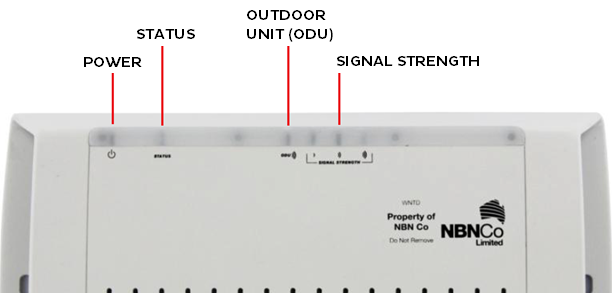
- Do you have any devices connected to your modem with an Ethernet cable? If these devices can visit a website but devices on Wi-Fi can’t, switch to troubleshooting Wi-Fi No Connection.
- If you can view websites on some devices but not others, even when they’re both connected the same way, you may need to fix some browser settings. Check out our guide on Browsing issues.
- If you have a phone with mobile data, use it to run an nbn service test in My Account.
If the nbn service test identifies an issue, we’ll contact you.
- Still can't get online? Please call us on 1300 997 271 and we’ll help you.
If your TPG nbn Wireless service is running slowly, these steps will help you identify the issue.
- Your service may just be affected by planned maintenance. You can check your address on nbn®'s Network status and outages page and our Network Status page.
If there is planned maintenance, the results will give you an estimated fix time.
- Make sure that your nbn Wireless antenna is clear of any tree branches or other objects. Severe weather or heavy clouds can also cause connection issues.
If your antenna has been damaged, please call us on 1300 997 271.
- Find your nbn modem and turn off its power outlet for at least 10 seconds.
- Turn the outlet back on and wait for your modem’s Internet light to come on, then run a speed test.

- Do you have any devices connected to your modem with an Ethernet cable? If speeds on these devices are fine but devices on Wi-Fi are slow, switch to Troubleshooting Wi-Fi speed.
- Make sure your modem’s Ethernet cables are in good condition, with “CAT6” or “CAT5e” printed on them.
Older Cat5 Ethernet cables are not recommended for nbn services. You’ll need to replace any broken or chewed cables.
- Your speed may temporarily slow down if you’re running more devices or apps than your connection can handle at the same time. For example, if a device is downloading a large file or running a 4K streaming app, your speed should improve when it’s finished.
If you need to run more devices or apps at the same time, you can change your plan in My Account or call us on 13 14 23 for support.
- Run a scan on your antivirus/anti-malware software. If any infections are detected, make sure they are quarantined and removed.
Contact your software’s Customer Support if you need help.
- If you have a phone with mobile data, use it to run an nbn service test in My Account.
If the nbn service test identifies an issue, we’ll contact you.
- Still getting slow speeds? Please call us on 1300 997 271 and we’ll help you.
Your modem will take care of the hard stuff like internet settings, but we’ll need your help to plug it in. The main cables you need will come in the box, and you can grab extra Ethernet cables from the shops if you need them.
Choose your modem to get started:
| Picture | Modem |
|---|---|

|
Wi-Fi Max Modem |
|
|
VX420-G2V Modem |

|
VX420-G2H Modem |
|
|
VX220-G2V Modem |
|
|
TP-Link VR1600v |
|
TPG modem not listed here? See Guides for older modems. |
|
|
Don't have a TPG modem? See our BYO modem guide. |
How to plug in your Wi-Fi Max Modem for nbn Wireless
- Plug in your Wi-Fi Max Modem
- Find your nbn® Connection Box (NCB) and unplug any old modem
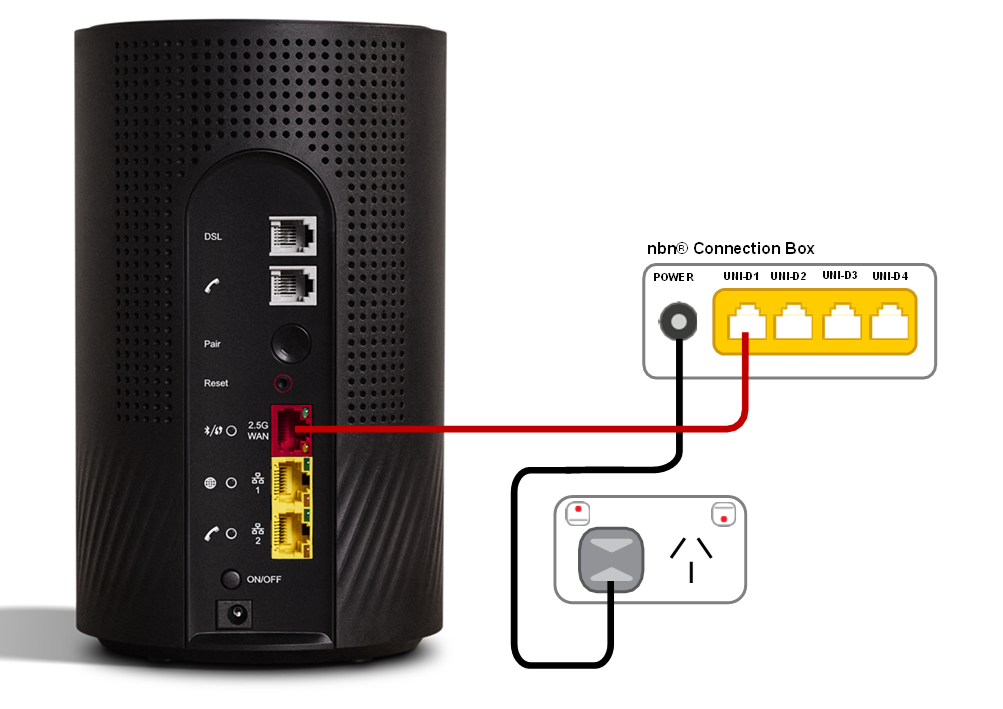
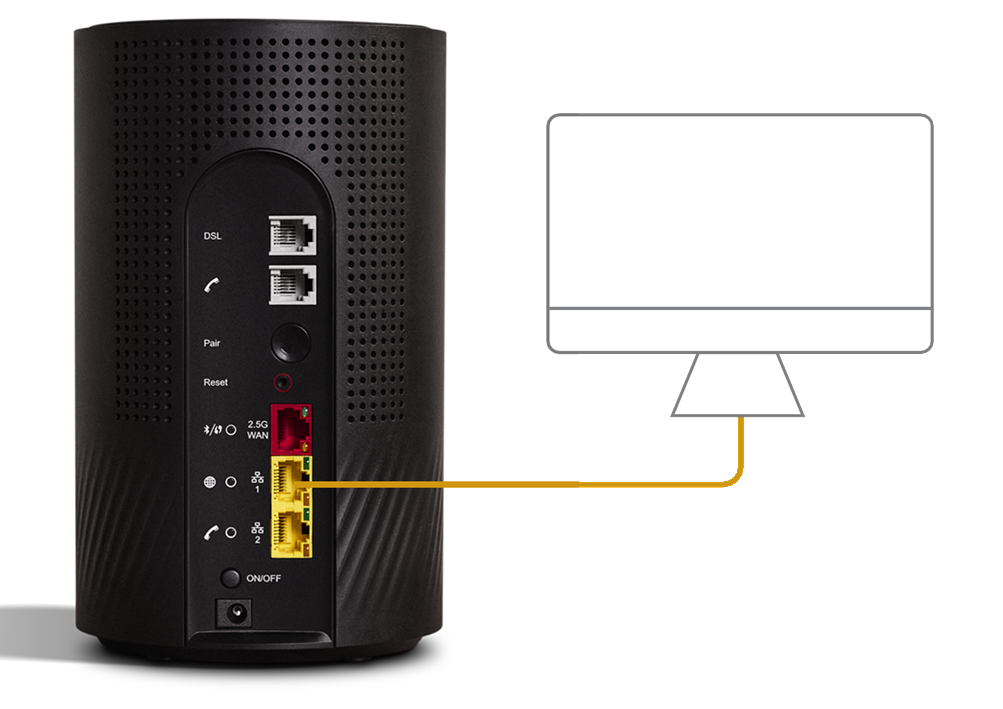
- Use the red Ethernet cable to connect your modem’s red 2.5G WAN port to the yellow UNI-D1 port.
If UNI-D1 doesn't work, try each other port and wait a few minutes to see if the Connection Box gets a flashing green STATUS light. The lights are behind the front panel on the Connection Box.
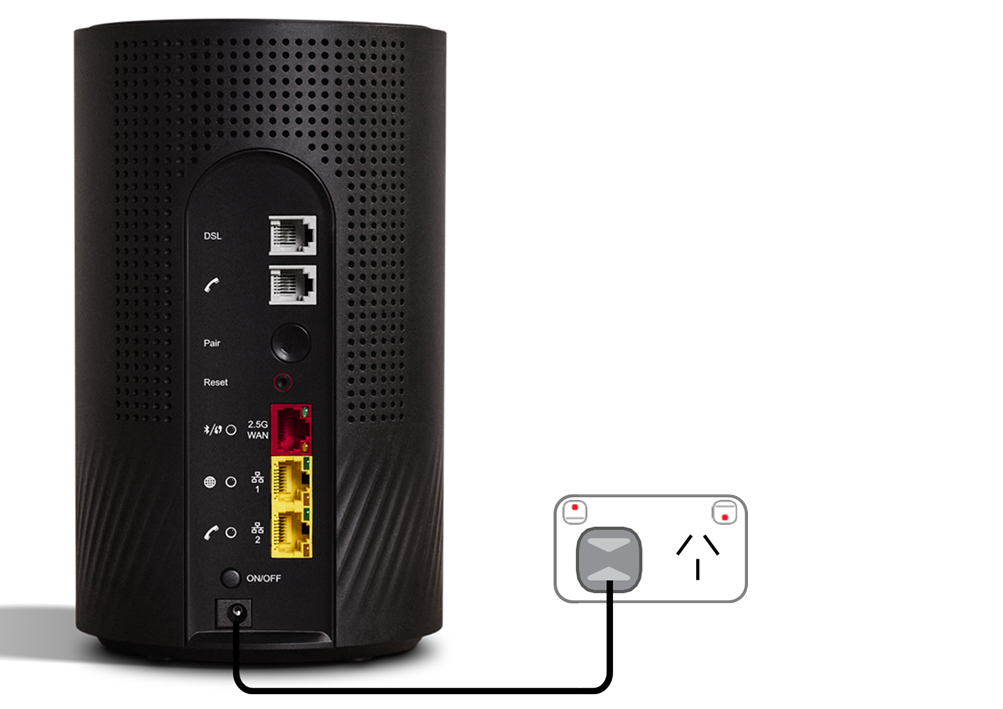
- Power on your Wi-Fi Max modem.
- Use the power cable to connect your Wi-Fi modem to a power outlet, then press the ON/OFF button.
- Wait 20 minutes for the automatic setup to complete.
- You should have a green light on the front of your Wi-Fi modem. If it’s red, call 1300 997 271 for help.
- Connect devices via Ethernet.
- For online gaming and HD/4K streaming, Ethernet is better than Wi-Fi. Use Ethernet for desktop PCs, gaming consoles or TVs if you can.
- You can use additional Ethernet cables to connect up to 2 devices to the yellow LAN ports.
- You can connect more devices over Wi-Fi.
- Connect your Wi-Fi devices.
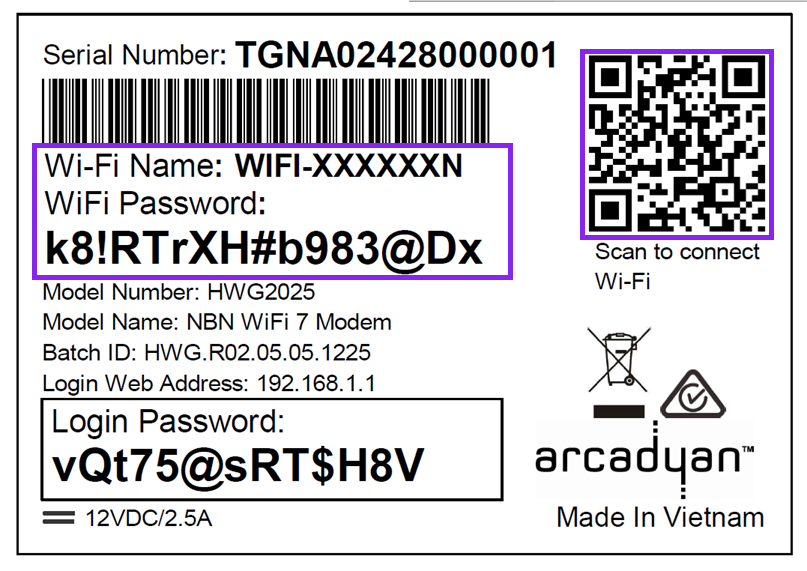
- Find the default name of your Wi-Fi network printed next to “Wi-Fi Name” on your modem’s barcode sticker.
- Select your Wi-Fi Name on your device, then enter the password printed next to “Wi-Fi Password” on your modem’s barcode sticker.
- If you’re using a smartphone, you can just scan the QR code on your modem’s barcode sticker.
Want to customise your Wi-Fi name and password? You can use the My Internet Connect app.
- Plug in your phone.
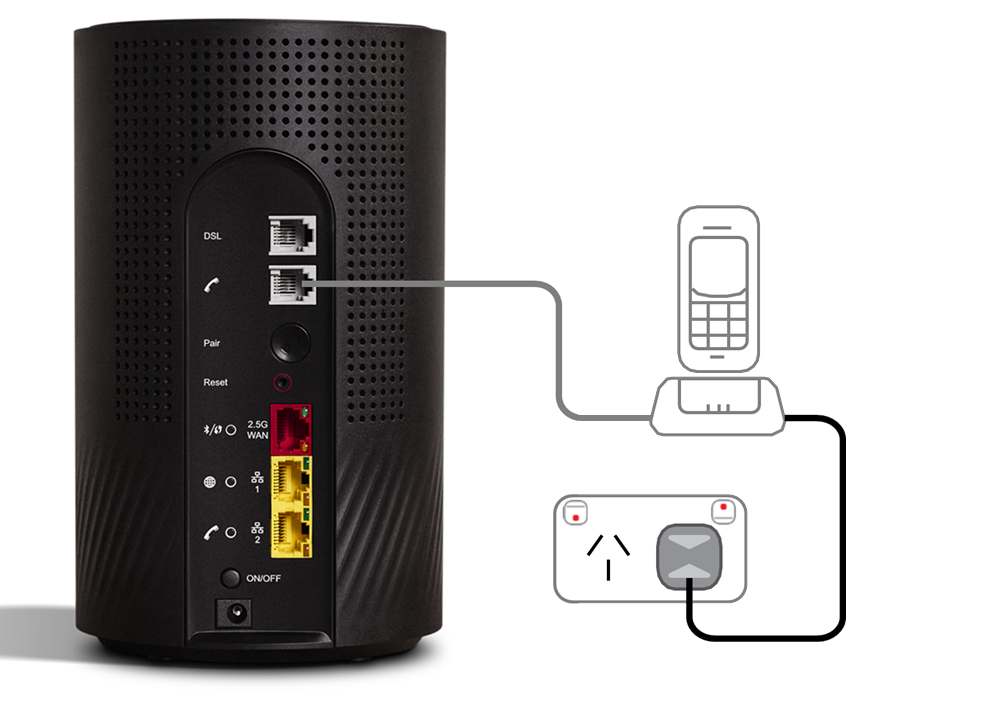
- Got a TPG Voice service? Use a phone cable to plug your VoIP-ready phone into the grey Phone port.
- Make sure your phone is plugged into a power outlet.
- You should have a green Phone light on the back of your modem. If it’s off or flashing blue, call us for help.
- Download the My Internet Connect app.
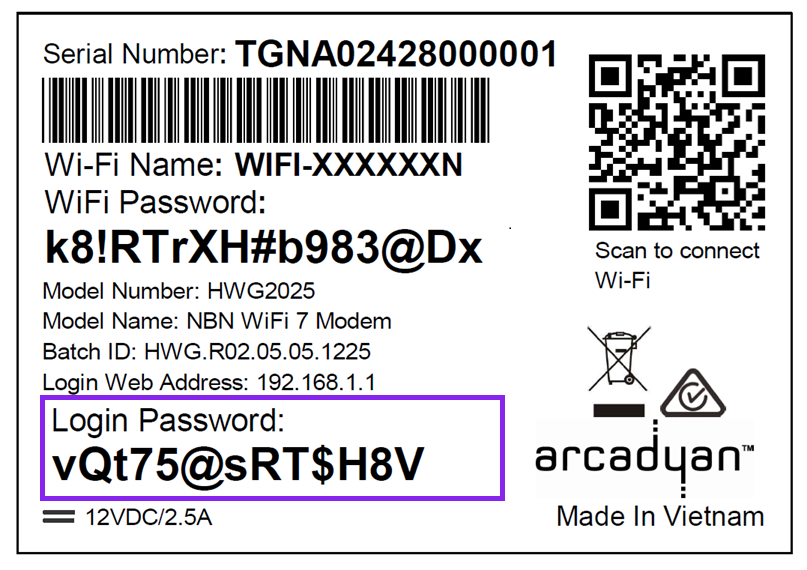
It’s easy to manage your home network with the My Internet Connect app.- Make sure your device is connected to your modem’s Wi-Fi network.
- Enter the Login Password on your modem’s barcode sticker.
- Need help? Call our team using these numbers:
- 13 14 23 in Australia.
- +61 2 9007 3023 from overseas.
- National Relay Service for hearing impaired customers.
How to plug in your VX420-G2V Modem for nbn Wireless
- Wait for a message from us asking you to plug in your nbn modem. We need to get your connection ready on our side first.
- Find your nbn Connection Box (NCB) – this will be connected to the wall socket for your nbn Wireless antenna. You may already have a modem plugged in from your last internet service. Unplug any old modem from the NCB and power outlet.
- Use the power cable to connect your modem's Power port to a power outlet, then press your modem’s ON/OFF button.
- Use the Ethernet cable to connect your modem's blue WAN port to your NCB's UNI-D1 port.
- Leave your modem alone for 30 minutes while it runs through its automatic setup.
- Check the Internet light on your modem. If it’s green, you’re online and you can start connecting your devices.
No green light? Call us on 1300 997 271 and we can help you out.
-
You'll find the default Wi-Fi name and password on your modem's barcode sticker. If you want to change your Wi-Fi name or password, use this guide.
- Your devices will automatically connect to the best Wi-Fi possible. If your Wi-Fi’s running slow, check out Improving Wi-Fi Signal.
- For online gaming or HD/4K streaming, Ethernet is better than Wi-Fi. If you have extra Ethernet cables, you can connect up to 4 devices to your modem’s yellow LAN ports.
- To use your TPG Voice phone service, just plug a handset into your modem’s green Phone port.
-
You’re now good to go.
If you don’t want to keep your old modem, see if your local council has any eWaste recycling facilities.
How to plug in your VX420-G2H Modem for nbn Wireless
- Wait for a message from us asking you to plug in your nbn modem. We need to get your connection ready on our side first.
- Find your nbn Connection Box (NCB) – this will be connected to the wall socket for your nbn Wireless antenna. You may already have a modem plugged in from your last internet service. Unplug any old modem from the NCB and power outlet.
- Use the power cable to connect your modem's Power port to a power outlet, then press your modem’s ON/OFF button.
- Use the power cable to connect your modem's Power port to a power outlet.
- Use the Ethernet cable to connect your modem's blue WAN port to your NCB's UNI-D1 port.
- Leave your modem alone for 30 minutes while it runs through its automatic setup.
- Check the Internet light on your modem. If it’s green, you’re online and you can start connecting your devices.
No green light? Call us on 1300 997 271 and we can help you out.
-
You'll find the default Wi-Fi name (SSID) and password on your modem's barcode sticker. If you want to change your Wi-Fi name or password, use this guide.

- Your devices will automatically connect to the best Wi-Fi possible. If your Wi-Fi’s running slow, check out Improving Wi-Fi Signal.
- For online gaming or HD/4K streaming, Ethernet is better than Wi-Fi. If you have extra Ethernet cables, you can connect up to 4 devices to your modem’s yellow LAN ports.
- To use your TPG Voice phone service, just plug a handset into your modem’s green Phone port.

-
You’re now good to go.
If you don’t want to keep your old modem, see if your local council has any eWaste recycling facilities.
How to plug in your VX220-G2V Modem for nbn Wireless
- Wait for a message from us asking you to plug in your nbn modem. We need to get your connection ready on our side first.
- Find your nbn Connection Box (NCB) – this will be connected to the wall socket for your nbn Wireless antenna. You may already have a modem plugged in from your last internet service. Unplug any old modem from the NCB and power outlet.
- Use the power cable to connect your modem's Power port to a power outlet, then press your modem’s ON/OFF button.
- Use the Ethernet cable to connect your modem's blue WAN port to your NCB's UNI-D1 port.
- Leave your modem alone for 30 minutes while it runs through its automatic setup.
- Check the Internet light on your modem. If it’s blue, you’re online and you can start connecting your devices.
No blue light? Call us on 1300 997 271 and we can help you out.
-
You'll find the default Wi-Fi name and password on your modem's barcode sticker. If you want to change your Wi-Fi name or password, use this guide.
- Your devices will automatically connect to the best Wi-Fi possible. If your Wi-Fi’s running slow, check out Improving Wi-Fi Signal.
- For online gaming or HD/4K streaming, Ethernet is better than Wi-Fi. If you have extra Ethernet cables, you can connect up to 4 devices to your modem’s yellow LAN ports.
- To use your TPG Voice phone service, just plug a handset into your modem’s green Phone port.

- You’re now good to go.
If you don’t want to keep your old modem, see if your local council has any eWaste recycling facilities.
How to plug in your TP-Link VR1600v for nbn Wireless
- Wait for a message from us asking you to plug in your nbn modem. We need to get your connection ready on our side first.
- Find your nbn Connection Box (NCB) – this will be connected to the wall socket for your nbn Wireless antenna. You may already have a modem plugged in from your last internet service. Unplug any old modem from the NCB and power outlet.
- Use the power cable to connect your modem's Power port to a power outlet, then press your modem’s Power button.
- Use the power cable to connect your modem's Power port to a power outlet.
- Use the Ethernet cable to connect your modem's blue WAN port to your NCB's UNI-D1 port..
- Leave your modem alone for 30 minutes while it runs through its automatic setup.
- Check the Internet light on your modem. If it’s green, you’re online and you can start connecting your devices.
No green light? Call us on 1300 997 271 and we can help you out.
-
You'll find the default Wi-Fi name (SSID) and password on your modem's barcode sticker. If you want to change your Wi-Fi name or password, use this guide.
- Your devices will automatically connect to the best Wi-Fi possible. If your Wi-Fi’s running slow, check out Improving Wi-Fi Signal.
- For online gaming or HD/4K streaming, Ethernet is better than Wi-Fi. If you have extra Ethernet cables, you can connect up to 4 devices to your modem’s yellow LAN ports.
- To use your TPG Voice phone service, just plug a handset into your modem’s grey Phone 1 port.

-
You’re now good to go.
If you don’t want to keep your old modem, see if your local council has any eWaste recycling facilities.
If your TPG nbn HFC service is having dropouts, it means your internet will go offline and come back online intermittently. These steps will help you identify the issue.
- Your service may just be affected by an outage or planned maintenance. You can check your address on nbn®'s Network status and outages page and our Network Status page.
If there is an outage or planned maintenance, the results will give you an estimated fix time.
- Do you have any devices connected to your modem with an Ethernet cable? If these devices stay connected when devices on Wi-Fi drop out, switch to troubleshooting Wi-Fi Dropouts.
- Find your nbn modem and make sure the cables are plugged in securely and not damaged. Our setup guide will show you how to plug in.
You’ll need to replace any broken or chewed cables.

- Log into My Account and run an nbn service test.
If the nbn service test identifies an issue, we’ll contact you.
- Still getting dropouts? Please call us on 1300 997 271 and we’ll help you. Take note of the Serial Number (S/N) and CMAC Number on your nbn Connection Device's barcode sticker because we'll need these details to investigate further.
Arris CM8200 (supplied before 1 October 2024)
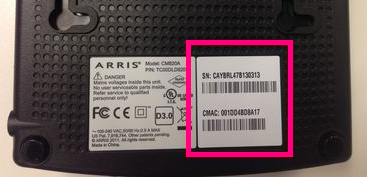
Arris CM3500 (supplied after 1 October 2024)